
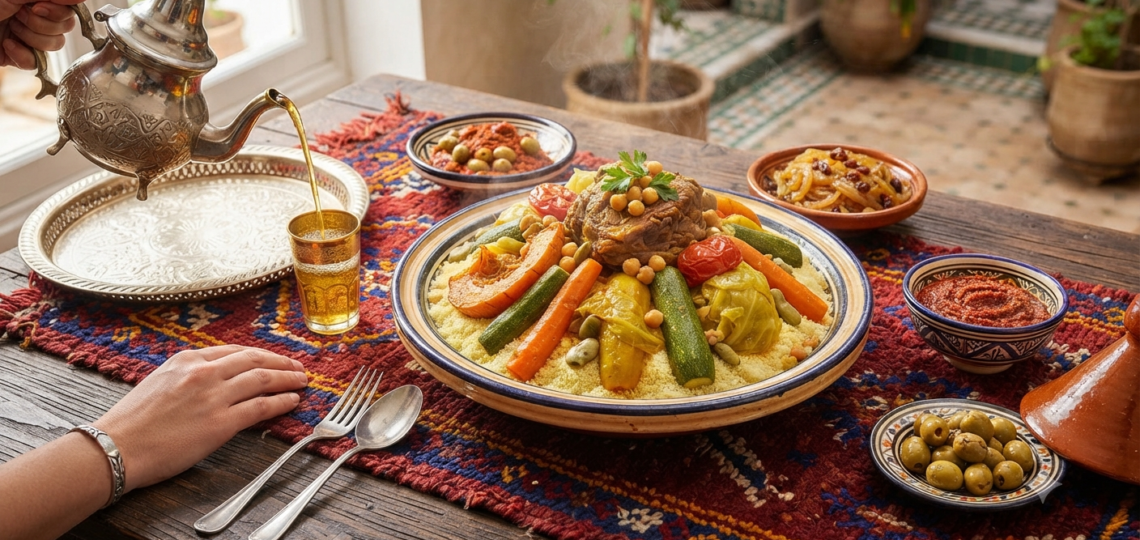
1. Couscous Bidaoui (The Iconic 7-Vegetable Platter)
To experience the true heart of Moroccan hospitality, you have to join a local family for a traditional Friday lunch. That is when Couscous Bidaoui (Casablanca style) takes center stage. This legendary dish features a mountain of incredibly light, triple-steamed semolina grains crowned with slow-simmered beef or lamb. It is traditionally surrounded by a precise arrangement of seven seasonal vegetables: sweet pumpkin, crisp zucchini, earthy turnips, carrots, tender cabbage, hearty potatoes, and buttery chickpeas.
2. Couscous Tfaya (The Ultimate Sweet & Savory Fusion)
If you appreciate complex, contrasting flavor profiles, Tfaya will be a highlight of your culinary journey. Built over a delicate, aromatic chicken broth, this version replaces the heavy vegetable medley with a lavish topping of deeply caramelized onions and plump raisins. Infused with honey, warm cinnamon, and a hint of orange blossom water, the dish is finished with a generous scatter of crunchy, toasted almonds for a perfect bite.
3. Couscous Belboula (The Ancient Barley Tradition)
For an authentic, rustic alternative to classic wheat semolina, look no further than Belboula. Crafted from cracked barley grains rather than durum wheat, this variety offers a darker, richer color and a distinctly nutty, robust texture. Highly prized throughout Morocco for its exceptional nutritional benefits and high fiber content, it brings a comforting, deep earthiness to the table.
4. Couscous Badaz (The Southern Cornmeal Specialty)
Travel down to the scenic Souss-Massa region or the breezy Atlantic fishing towns, and you will discover Badaz. Breaking away from tradition, the grains are meticulously hand-rolled from fine corn flour instead of wheat. The result is a striking, bright yellow base with a subtle sweetness that pairs beautifully with fresh coastal seafood catch or bitter winter greens.
5. Seffa Medfouna (The Decadent Sweet & Savory Surprise)
Seffa Medfouna completely flips expectations of what a main course should be. At first glance, you are presented with a sweet mound of steamed, butter-kissed semolina dusted with powdered sugar, cinnamon, and crushed almonds. However, “Medfouna” translates to buried—and hidden directly beneath that sweet canopy lies a deeply savory, intensely aromatic saffron chicken or beef stew waiting to be uncovered.
6. Couscous Khoumassi (The Nomad’s Five-Grain Blend)
A rare, highly traditional treasure originating from nomad heritage, Khoumassi is an intricate blend of five distinct flours: corn, barley, rye, wheat, and unrefined durum. This artisanal combination yields a highly textured, complex grain base that perfectly absorbs and carries rich, heavy winter broths and slow-cooked root vegetables.
7. Saykouk (The Chilled Medina Street Staple)
When the summer heat rolls through the labyrinth corridors of the ancient medinas, locals turn to Saykouk for instant refreshment. Served chilled, this light dish features pre-cooked barley or wheat couscous grains swirled directly into a bowl of cold, tangy, fermented buttermilk (lben). It is a simple, cooling street food classic that dates back generations.
8. Couscous with Fava Beans (The Vibrant Spring Harvest)
As spring coaxes new life into the terraced fields of the Atlas Mountains, local menus transition to celebrate the season. This vibrant variation highlights fresh, tender green fava beans, split and simmered alongside wild mountain herbs, sweet green peas, and wild turnips. The result is a remarkably clean, light, and fragrant broth that perfectly mirrors the changing season.
9. Couscous t’al Omra (The Grand Celebration Feast)
Reserved strictly for major life events, returning pilgrims, or massive family reunions, Couscous t’al Omra represents the pinnacle of Moroccan generosity. This premium platter showcases the finest, most tender cuts of local lamb or mutton, layered extravagantly with sweet, caramelized Tfaya onions and hard-boiled eggs, signaling ultimate honor to the guests.
10. Berkous (The Large Pearl Winter Warm-Up)
While standard Moroccan variants pride themselves on the smallest, finest grains possible, Berkous goes in the opposite direction with large, hand-rolled pasta pearls. Rather than being steamed over a pot, these large pearls are boiled directly inside a thick, heavily spiced tomato and herb broth. It cooks down into a rich, comforting porridge designed to keep desert travelers warm during freezing winter nights.