Have you ever visited a place that didn’t just show you its sights, but actively rewrote your senses?
For many travelers, that place is Morocco. From the aromatic spice towers of the Marrakech medina to the silent, golden expanses of the Sahara, this North African gem is less of a destination and more of a sensory awakening.
If you are currently planning your first adventure, this guide shares the stories, inspiration, and practical Morocco travel tips you need to turn your dream trip into reality.
1. Getting Lost in the Marrakech Medina
The heartbeat of Morocco is found in its ancient, walled historic centers, known as medinas. Marrakech, perhaps the most famous, is a masterclass in beautiful chaos.
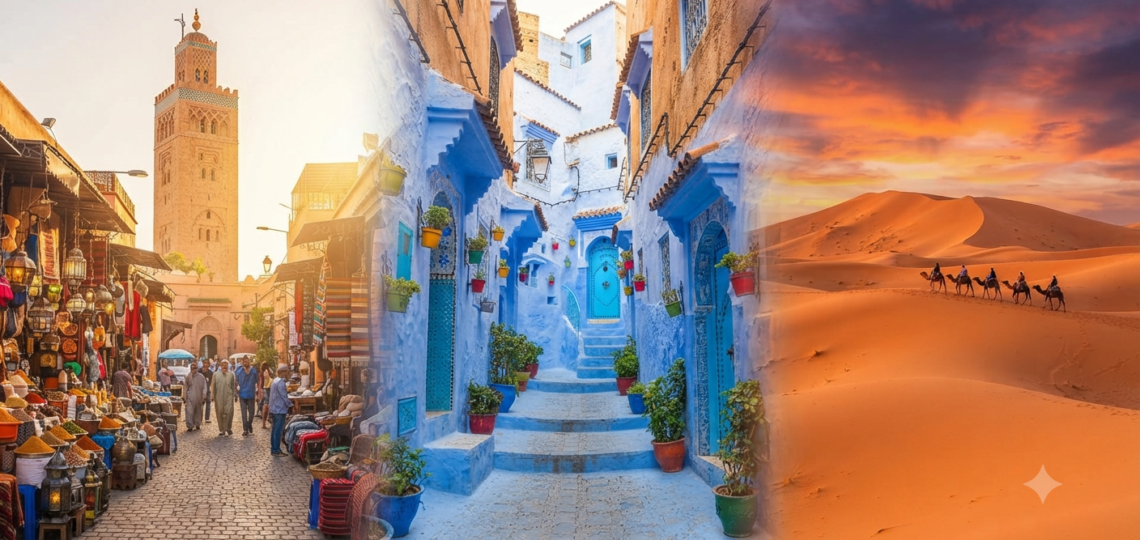
Step inside, and the scent of orange blossom water, freshly dyed leather, and roasted cumin instantly takes over. There is a local saying: “If you haven’t gotten lost in Marrakech, you haven’t truly arrived.” It’s true. The narrow, labyrinthine alleys are designed to disorient you, guiding you past hidden courtyards, vibrant hand-woven rugs, and artisans hammering brass lantern frames by hand.
Eventually, all paths lead back to Jemaa el-Fnaa, the main square. As the sun sets, smoke from open-air food stalls rises into the sky, and Gnaoua musicians strike up rhythms that have echoed through these walls for centuries.
2. Sleeping Under the Stars: The Magic of a Sahara Desert Tour
If Marrakech is a symphony of sound, the dunes of Merzouga are a monument to silence. Taking a Sahara desert tour is often cited by travelers as a life-changing experience.
As you ride a camel over the crest of the Erg Chebbi dunes, the horizon stretches out infinitely in shades of burnt orange and gold. At night, the temperature drops, and the sky lights up with a clarity you can only find in the deep desert—a velvet canopy thick with shooting stars and the glowing band of the Milky Way. Huddled around a campfire, listening to traditional Amazigh (Berber) drumming, you realize how vast and beautifully quiet the world can still be.
3. Wandering the Blue Pearl: Chefchaouen
Tucked away in the Rif Mountains of northern Morocco sits Chefchaouen, famously known as the “Blue Pearl”.
Almost every building, doorway, and staircase in this mountain town is painted in varying shades of blue—from pale baby blue to deep cobalt. Walking through Chefchaouen feels like stepping inside a watercolor painting.
Unlike the high-energy souks of Marrakech, the vibe here is distinctly laid-back. It’s a place to slow down, sip fresh pomegranate juice, and watch local life unfold from a rooftop café.
Planning Your Journey: Essential Morocco Travel Tips
To help you transition from inspiration to itinerary, here are a few practicalities to keep in mind.
What is the Best Time to Visit Morocco?
The best time to visit Morocco is during the shoulder seasons: spring (March to May) or autumn (September to November). During these months, the weather is pleasantly warm without the scorching summer heat of the desert, making it ideal for both city exploration and mountain trekking.
What to Pack for Morocco
When deciding what to wear in Morocco, aim for respectful, lightweight layers. Morocco is a conservative, predominantly Muslim country.
- For both men and women: Loose-fitting clothing that covers your shoulders and knees is highly recommended, especially when visiting holy sites or rural villages.
- Must-haves: A lightweight scarf (great for sun protection, dust in the desert, and covering up), comfortable walking shoes for cobblestone medinas, and sunscreen.
Embodying the Spirit of Moroccan Hospitality
Moroccan culture runs on ritual and connection. You will find that “Moroccan whiskey”—the affectionate nickname for sweet, fresh mint tea poured from high above to create a frothy head—is offered constantly. Accepting a glass of tea isn’t just about enjoying a warm drink; it is an act of connection and mutual respect.
Step into Morocco with an open heart, a willingness to get lost, and a desire to listen. You’ll leave with stories that stay with you long after the dust has settled on your suitcases.