Morocco is a land of incredible landscapes, rich history, and vibrant culture. But what truly makes a trip here unforgettable is the warmth and hospitality of its people. Understanding Moroccan etiquette and local customs allows you to navigate daily interactions smoothly, show respect, and build genuine, meaningful connections with locals throughout your journey.
Here is your practical guide to cultural norms, greetings, dining traditions, and social graces in Morocco.
1. Warm Greetings and Social Respect
Greetings are essential to Moroccan culture. Rushing straight to business or asking for directions without a proper greeting can come across as blunt.
- Say Hello First: A simple “Salam Alaykum” (Peace be upon you) opens doors everywhere—from markets to taxi rides. The standard response is “Wa Alaykum As-Salam.”
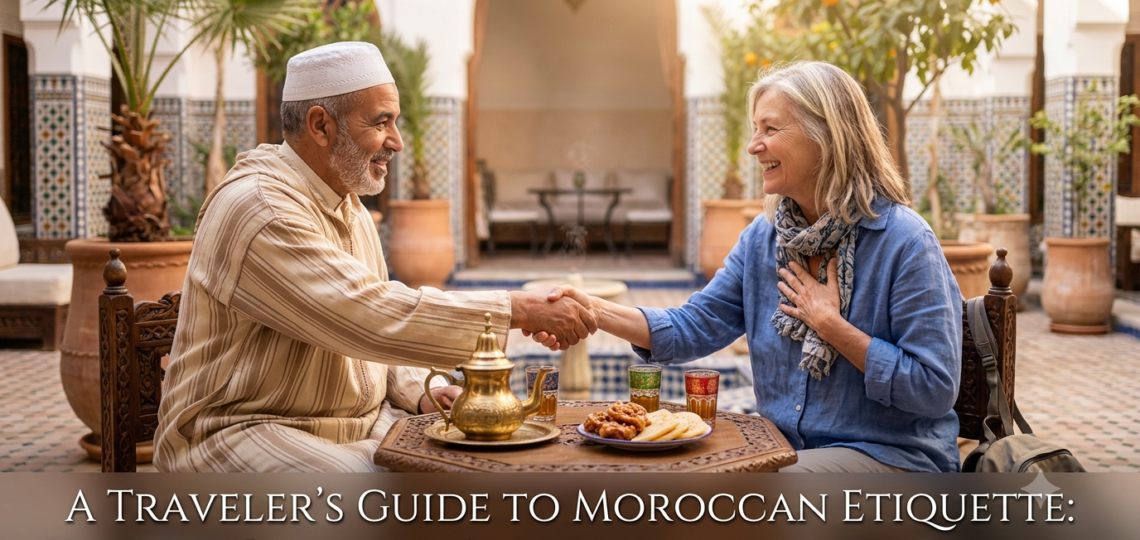
- Handshakes and Placing Hands on Hearts: A gentle handshake with people of the same gender is common. After shaking hands, placing your right hand over your heart is a traditional gesture showing sincere respect and warmth.
- Respect Personal Space Across Genders: In traditional settings, physical contact between members of the opposite sex in public is minimal. Follow the local’s lead when offering a handshake.
2. Dress Appropriately for Cultural Settings
While major cities like Marrakech and Casablanca are accustomed to modern international attire, Morocco remains a modest society, particularly in rural areas, medinas, and religious sites.
- Dress Modestly: Covering shoulders and knees is appreciated by locals and helps you blend in comfortably. Lightweight linen shirts, long pants, and maxi dresses or skirts are ideal choices.
- Visiting Sacred Spaces: Non-Muslims are generally not permitted inside active mosques in Morocco (with notable exceptions like the Hassan II Mosque in Casablanca). When approaching religious sites, dress respectfully and refrain from taking intrusive photos.
3. The Etiquette of Dining and Tea
Food is central to Moroccan hospitality. Being invited to share a meal or a cup of mint tea is one of the best ways to experience local life.
- The Right Hand Rule: Always use your right hand for eating, passing dishes, or handing money to someone. The left hand is traditionally reserved for personal hygiene.
- Accepting Mint Tea: Moroccan mint tea (often called “Moroccan whiskey”) is a symbol of welcome. Refusing a offered cup can be seen as impolite; accepting even a small glass shows appreciation.
- Sharing a Communal Tagine: When eating from a shared dish, eat from the portion directly in front of you. Use bread as an eating utensil to scoop up sauce and meat.
4. Photography with Respect
Moroccans are warm and welcoming, but taking photos without permission can feel invasive, especially in busy souks or traditional villages.
- Always Ask Permission: Before photographing market vendors, artisans, or locals, ask politely: “Mumkin Soora?” (May I take a picture?).
- Offer Gratitude: If an artisan or performer agrees—especially in tourist-heavy spots like Jemaa el-Fnaa—tipping a small amount (10–20 MAD) is standard practice.
5. Haggling in the Souks gracefully
Bargaining in the traditional markets is a social tradition, not an argument. Approach it as a lighthearted conversation rather than a confrontation.
- Keep It Friendly: Smile, stay patient, and maintain a polite tone throughout the negotiation.
- Know the Value: If a price feels right to you and fair for the craftsman’s work, complete the transaction with a smile. Showing respect for the artisan’s work fosters goodwill.
Final Thoughts
Connecting with locals in Morocco comes down to respect, patience, and a willingness to learn. By embracing these simple cultural guidelines, you’ll transform standard tourist interactions into memorable, authentic experiences.